October is Sudden Cardiac Arrest Awareness Month—a time to raise awareness about sudden cardiac arrest (SCA) and, more importantly, to help people understand what they can actually do if it happens.
Sudden cardiac arrest can happen without warning, anywhere and at any time. Knowing how to recognise cardiac arrest, start CPR (Cardio Pulmonary Resuscitation) and use an AED (Automated External Defibrillator) could help save a life.
Sudden cardiac arrest happens when the heart suddenly stops beating effectively. A person in cardiac arrest will become unresponsive and stop breathing. Blood and oxygen are no longer being pumped to the brain and vital organs, and without immediate treatment, cardiac arrest is fatal.
It could happen to a loved one at home, a colleague at work, a student at school, a neighbour in the community—or even a complete stranger in a public place.
And when it does happen, the people standing nearby are often the first people who can make a difference.
Why Being Ready for Sudden Cardiac Arrest Matters
Sudden cardiac arrest is a medical emergency, and every single second counts.
Around 70% of out-of-hospital cardiac arrests happen at home, which means the person who first responds is very often not a doctor, nurse or paramedic. It is a husband, wife, parent, child, friend or other family member.
That can feel frightening. But you don’t need to be a healthcare professional to help.
You just need to know what to do.
Starting CPR immediately can double or even triple a person’s chance of survival. Early use of an AED can improve those chances even further. With every minute that passes without CPR and defibrillation, the chance of survival decreases significantly.
This is why knowing CPR and how to use an AED is so important.
What Are the Signs of Sudden Cardiac Arrest?
Sudden cardiac arrest usually happens without warning. A person experiencing cardiac arrest will typically collapse, become unresponsive and stop breathing.
They may have a seizure that lasts around 30 seconds, or they may make abnormal gasping sounds, sometimes described as agonal breathing. This is not normal breathing and should not be mistaken for a sign that the person is okay.
If someone is unresponsive and not breathing normally or not breathing at all, treat it as a cardiac emergency.
Call 998, start CPR and get an AED as quickly as possible.
You don’t need to wait to be certain. Acting quickly could make the difference.
Call, Push, Shock: What to Do During Cardiac Arrest
When someone suddenly collapses and is not responding or breathing normally, remember three simple words:
Call. Push. Shock.
CALL — Call 998 for an ambulance in the UAE and ask someone to bring an AED if one is available.
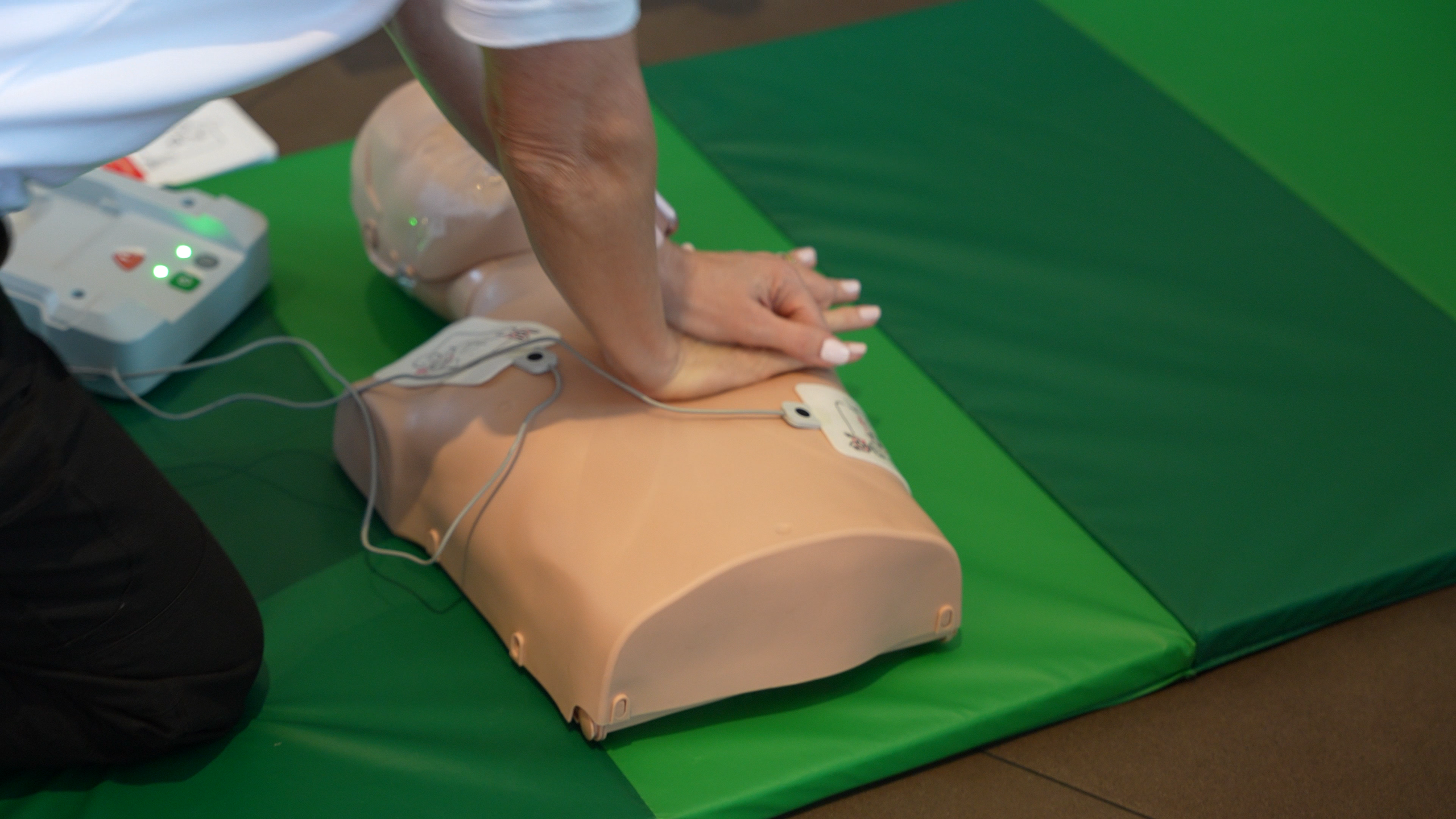
PUSH — Start CPR. Push hard and fast in the centre of the chest.
SHOCK — Use an AED as soon as one is available. The AED will assess the person’s heart rhythm and tell you whether a shock is needed. Simply follow the voice prompts and instructions.
The sooner an AED can be used, the better. According to the American Heart Association, 9 out of 10 cardiac arrest victims who receive a shock from an AED in the first minute survive.
And don’t be afraid of the AED. It is designed to be used by ordinary people.
You Don’t Have to Be a Healthcare Professional to Help
One of the biggest misconceptions about CPR is that you need to be medically trained to make a difference.
You don’t.
Of course, proper CPR training gives you the knowledge, confidence and practical skills to respond effectively. But in an emergency, doing something, is far better than doing nothing, because you are afraid of doing it wrong.
If someone is unresponsive and not breathing or not breathing normally, call for help, start CPR and get an AED.
The AED will guide you through the process.
You don’t have to know everything.
You just need to be willing to act.
Turning Sudden Cardiac Arrest Awareness Into Action
Awareness is important—but awareness alone doesn’t save lives. Action does.
Every person who learns CPR is another person who could potentially help a friend, family member, colleague, child or stranger in those critical first few minutes before an ambulance arrives.
So, this October, why not turn awareness into action?
Learn the skills.
Take a CPR course and learn how to perform CPR and use an AED.
Know your surroundings.
When you’re at school, work, a sports facility, shopping centre or community venue, take a moment to notice where the AED is located. You never know when you might need it.
Talk about it.
Encourage your family, friends and colleagues to learn CPR too. The more people who know what to do, the safer our communities become.
Be Ready When It Matters
We all hope we never have to use CPR.
But if the moment comes, knowing what to do can turn a frightening situation into an opportunity to help.
Call. Push. Shock.
Because when sudden cardiac arrest happens, you may be the person standing closest to the person who needs help.
And that person could be someone you love.
This October, let’s do more than talk about sudden cardiac arrest. Let’s learn the skills that could help save a life.
Ready to Learn CPR?
EverSafe Training Centre provides CPR, AED and First Aid training in Dubai, helping parents, caregivers, schools, workplaces and community groups gain the confidence and practical skills to respond in an emergency.
Whether you are learning CPR for the first time or refreshing skills you have learned before, being prepared means you are more likely to know what to do when it matters most.
Learn the Facts. Gain the Skills. Save a Life.
At EverSafe Training Centre, we believe CPR is a skill everyone should have—not just healthcare professionals. Because a safer tomorrow starts today.
Medically reviewed by:
Joanne Newborn
Qualified Paramedic | DCAS Life Support Instructor | HSI Instructor
Training Manager, EverSafe First Aid Training Centre
Last medically reviewed: October 2026
This article provides general first aid and CPR information and does not replace practical CPR training, professional medical advice or emergency medical care.